Leave Your Message
The Metropolitan Area of the Valley of Mexico (ZMVM), centered around Mexico City (Ciudad de México - CDMX) and adjacent industrial municipalities in the State of Mexico (such as Tlalnepantla, Naucalpan, Ecatepec, and Cuautitlán Izcalli), stands as one of the most densely populated, commercially vibrant, and industrially critical logistics epicenters in Latin America. Across historical industrial zones like Vallejo (Azcapotzalco) and expanding logistics corridors throughout Cuautitlán, manufacturing plants rely heavily on natural gas (gas natural) pipelines and vast liquefied petroleum gas (LPG / Gas LP) bulk storage installations to power high-temperature furnaces, boiler rooms, paint booths, and chemical synthesis units.
Operating gas leak detector sensors in Mexico City presents three major geographic and geological challenges:
Situated at over 2,240 meters (7,350 feet) above sea level, CDMX exhibits atmospheric pressure approximately 22% lower than sea level. Conventional catalytic combustion sensors often drift or experience false alarms due to reduced partial oxygen pressure. Our advanced intelligent sensors feature dynamic barometric pressure compensation algorithms, guaranteeing stable zero baselines and precise LEL (Lower Explosive Limit) detection for methane, propane, and butane.
Resting on ancient lacustrine clay lakebeds, Mexico City is susceptible to tectonic amplifications. Earthquakes frequently stress buried municipal pipes, flange gaskets, and fuel supply manifolds. Our factory designs ruggedized explosion-proof detection nodes with integrated fast-action solenoid interlocks (normally open/closed) that automatically isolate gas feeds within 0.5 seconds of a seismic-induced micro-rupture.
Unlike cities reliant solely on utility methane, Mexico City utilizes enormous quantities of bottled and stationary tank Gas LP alongside expanding natural gas grids. Detectors must accurately distinguish between light buoyant methane (rising toward ceilings) and heavy stagnant propane/butane (pooling along floors and drainage sumps), demanding multi-tiered sensor topologies across factories and commercial kitchens.
As nearshoring initiatives drive multi-million dollar investments into Mexico, multinational tier-1 automotive suppliers, pharmaceutical laboratories, and food & beverage processing conglomerates are modernizing their environmental health and safety (EHS) systems. Xinhaosi manufactures high-integrity industrial and commercial combustible gas sensor instruments tailored to meet Mexico City's demanding operational parameters.

Home Safety from Gas Monitoring
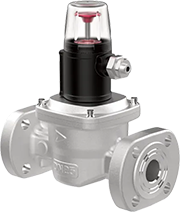
Protecting from the Source
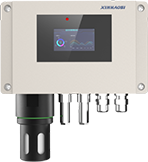
Smart Sensing for Urban Gas
In municipal utility contexts such as the extensive pipeline expansions overseen by Naturgy Mexico and local distribution entities, our urban gas telemetry units provide remote underground monitoring. Vaults beneath busy avenues like Paseo de la Reforma, Insurgentes, and Anillo Periférico are susceptible to water ingress, stray voltage corrosion, and methane accumulation. Our smart sensors incorporate IP67-rated explosion-proof enclosures and low-power NB-IoT / LoRaWAN telematics, enabling central dispatch engineers to detect microscopic fugitive leaks before gas reaches combustible thresholds.
Facility directors, plant safety managers, and EHS auditors operating in Mexico City must adhere to a stringent web of Official Mexican Standards (Normas Oficiales Mexicanas - NOM), Ministry of Labor and Social Welfare (STPS) directives, and the guidelines set forth by the Mexico City Civil Protection Secretariat (Secretaría de Gestión Integral de Riesgos y Protección Civil - SGIRPC). Deploying certified, factory-calibrated gas detectors is a critical legal and insurance necessity across Mexico:
Mandates safety conditions, fire prevention, and flame/gas protection systems across Mexican workplaces. In spaces storing flammable gases (hydrocarbons, LPG, solvent vapors), automated combustible gas detection sensors connected to audible-optical strobe alarms and ventilation extractors are mandatory for industrial certification.
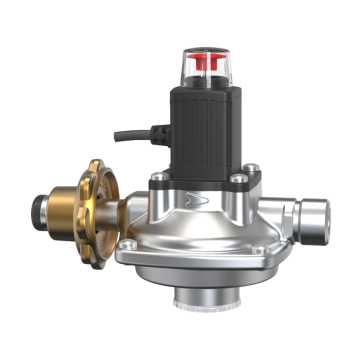
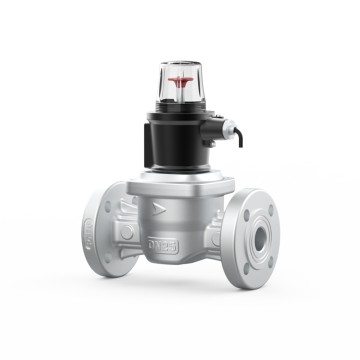
Dictates stringent technical rules for LP Gas installations, vaporizers, pressure regulation stations, and natural gas distribution piping. Our sensors seamlessly pair with heavy-duty cast aluminum emergency shut-off valves, satisfying strict inspection criteria during annual civil protection verifications.
Governs health and safety conditions in workplaces handling, transporting, or storing hazardous chemical substances. High-precision toxic (CO, H₂S, NH₃) and combustible leak detection ensures zero occupational exposure limits (OEL) violations in pharmaceutical, metalworking, and chemical formulation plants in Naucalpan and Tlalnepantla.
By purchasing directly from a high-capacity sensor manufacturing factory, Mexican engineering procurement contractors (EPCs) gain certified compliance with international standards (ATEX, IECEx, UL, and CE) that exceed local Mexican NOM requirements, guaranteeing rapid audit clearances, reduced insurance premiums, and dependable life safety.


Founded in 2003, Xinhaosi is one of the most influential and reliable brands in gas safety industry. We provide customer-focused products and services to safeguard the safe operation of every factory, the comfort of every city, the peace and happiness of every home. Powered by cutting‑edge production systems and technology, we deliver more advanced, intuitive, and precise gas safety solutions for shaping a safer future world.
Equipped with world-class surface mount technology (SMT) cleanrooms, automated environmental aging chambers, automated robotic calibration tunnels, and precision gas mixing benches, our factory delivers over 5 million sensor units annually to over 40 global markets. For enterprises in Mexico City, our factory-direct support guarantees customized OEM/ODM builds, specific analog (4-20mA, Modbus RS485) interfaces, and bilingual Spanish/English technical documentation.
The urban and industrial fabric of Mexico City spans diverse micro-environments, from heavy manufacturing hubs to densely packed historical restaurant districts. Our gas leak detector sensors are custom configured for these scenarios:
As Mexico City's oldest industrial zone revitalizes into a modern logistics and light-manufacturing cluster, legacy infrastructure intersects with automated robotics. In logistics warehouses and packaging plants, gas-fueled forklifts and central heating furnaces are monitored 24/7 with our IR-2610 and fixed catalytic gas sniffers, preventing hydrocarbon buildup in high-density rack storage bays.
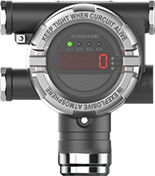
Mexico City's culinary industry is globally recognized. Commercial kitchens in boutique hotels and Michelin-recognized restaurants consume immense volumes of LPG in confined basement and rooftop utility rooms. Our compact JT-AT2008 series detectors, wired directly to our fast-action emergency shut-off valves, provide discrete, false-alarm-free combustible gas tracking, preventing gas pooling around dishwashers and open-flame cooking ranges.
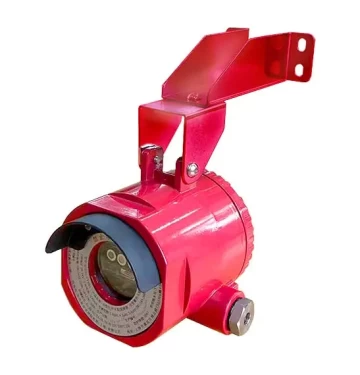
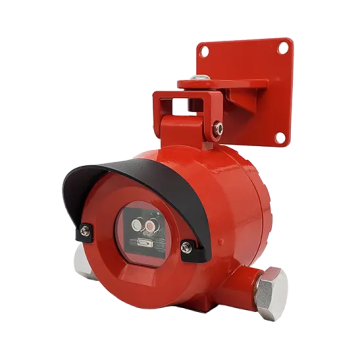
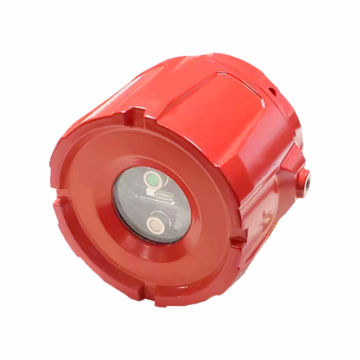
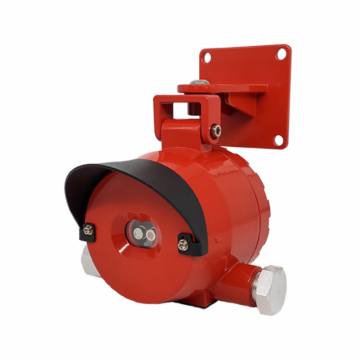
Tier-1 auto component makers utilizing plastic injection molding, paint finishing lines, and metal heat treatment require triple-spectrum optical flame detectors (IFD1020, FD1020) and combustible gas sensors. In environments where volatile organic compounds (VOCs) and natural gas line pressures fluctuate, our dual IR-UV sensors spot hydrocarbon deflagration in milliseconds without being triggered by welding arcs or halogen lightning.
The Sistema de Transporte Colectivo (Metro CDMX) and city utility tunnels traverse swampy soil prone to anaerobic decay, producing methane (CH₄) alongside potential gas pipeline seepage. Handheld portable gas detectors and fixed battery-backed detection nodes protect maintenance crews working in nocturnal tunnel maintenance shafts against explosive pockets and oxygen-depleted atmospheres.
From pinpoint gas leak detection at the sensor head to cloud SCADA supervision, programmable logic controller (PLC) communication, and instant valve cutoff, we supply Mexico City enterprises with an unbreakable safety barrier against industrial fires and explosions.
More About Solutions
The global and Latin American gas safety sector is experiencing a transformative technological upgrade. In manufacturing centers serving Mexico City, standard point detectors are rapidly evolving into intelligent, communicative, multi-sensing safety edge computers. Key trends include:
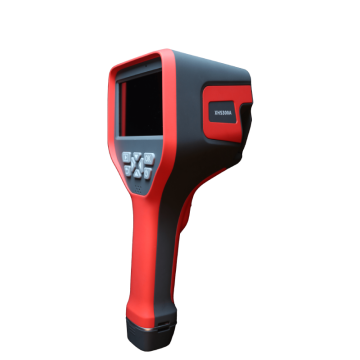
1. Optical Gas Imaging (OGI) & Uncooled Infrared Core Sensor Cameras: As embodied in our IR-2610 Handheld Uncooled Infrared Gas Leak Detector, maintenance personnel are no longer tethered to single-point probing. Using narrow bandpass thermal filtration tuned to the specific 3.2-3.4 µm hydrocarbon absorption band, Mexican utility inspectors can visually witness fugitive emissions—appearing as dark, billowing smoke plumes—from distances exceeding 15 meters, enabling rapid leak triage across crowded pipeline racks in Ecatepec without plant shutdowns.
2. Artificial Intelligence Sensor Drift Self-Correction: Temperature swings in Mexico City between chilly morning inversions and hot afternoons cause thermal drift in semiconductor and catalytic sensors. Next-generation Xinhaosi sensors leverage embedded neural-network microcontrollers that continuously monitor relative humidity, ambient temperature, and sensor aging curves, virtually eliminating false trigger events while maintaining maximum sensitivity to hazardous gases.
3. Clean Energy Transition (Green Hydrogen Blending & BESS Safety): As Mexico explores hydrogen blending into natural gas infrastructure and builds grid-scale Battery Energy Storage Systems (BESS) for renewable integration, detectors must respond to ultra-light hydrogen (H₂) molecules and off-gases from lithium-ion thermal runaways. Specialized multi-spectral flame detectors and dual-range H₂ / CO / CH₄ catalytic-electrochemical units ensure that Mexico City's clean energy projects remain safe from sudden blast hazards.
























January 20, 2026 – The global gas detection industry is witnessing a surge of technological breakthroughs in early 2026, with leading players launching advanced solutions that integrate precision sensing, real-time connectivity, and multi-functional safety features to address evolving risks in high-hazard sectors like oil and gas, chemicals, and refining.
As Battery Energy Storage Systems (BESS) play an increasingly critical role in global renewable energy grids, the demand for specialized gas detection equipment tailored to BESS safety needs is surging—driven by risks like thermal runaway, which releases hazardous gases such as hydrogen (H₂), carbon monoxide (CO) and methane (CH₄).
Jan. 22, 2026 – China has rolled out a suite of new national standards and technical regulations for gas detection equipment in 2026, marking a critical shift toward stricter safety oversight and pre-accident prevention across high-risk sectors like petrochemicals, catering, and municipal engineering.
Explore our full suite of certified industrial, municipal, and commercial instruments built in our ISO-accredited manufacturing facilities and distributed directly to safety engineers across Ciudad de México and greater Mexico.