Leave Your Message
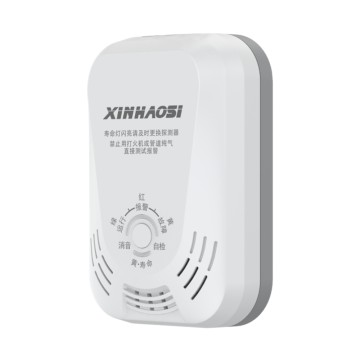
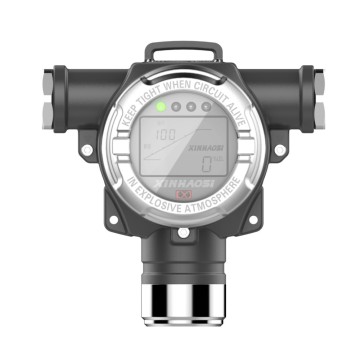
Commercial underground parking garages are highly complex micro-environments that present unique challenges for facility managers and safety engineers. Due to their subterranean nature and enclosed architecture, natural ventilation is virtually non-existent. Without an intelligent Gas Leak Detector Sensor for Commercial Underground Parking Garages, these spaces can quickly become hazardous zones, accumulating lethal concentrations of toxic and combustible gases.
Traditional internal combustion engine (ICE) vehicles emit massive amounts of CO and NO2. In enclosed underground structures, especially during peak commuting hours or traffic bottlenecks, CO levels can spike to lethal levels within minutes. Chronic exposure even at lower levels leads to severe health risks for parking attendants and patrons.
The rapid proliferation of EV charging stations in commercial garages introduces a new paradigm of risk. Lithium-ion battery thermal runaway events release highly combustible Hydrogen (H2) and toxic Volatile Organic Compounds (VOCs). Specialized detector sensors are now mandatory to prevent catastrophic underground explosions.
Underground garages often house central HVAC chillers, boiler rooms, and utility shafts. Leaks of refrigerants (like Freon) or natural gas from adjacent commercial boiler lines can displace oxygen or create explosive atmospheres, necessitating multi-gas detection capabilities integrated into a unified safety grid.
Safety First from Precision Sensing. Protecting from the Source with Smart Sensing for Urban Gas.
Detection Systems

Gas Detectors
Gas Solenoid Valves
Distribution & Monitoring
The global regulatory landscape for commercial building safety has evolved dramatically. Modern building codes, such as the International Mechanical Code (IMC) and ASHRAE Standard 62.1, strictly dictate the air quality requirements for enclosed parking facilities. Historically, commercial buildings relied on continuous operation of massive exhaust fans to maintain safe air quality. However, this approach is highly inefficient, consuming exorbitant amounts of electricity and driving up operational costs.
Today, the integration of a Gas Leak Detector Sensor for Commercial Underground Parking Garages is not just a safety measure; it is the cornerstone of Demand Control Ventilation (DCV). By utilizing highly calibrated electrochemical and NDIR (Non-Dispersive Infrared) sensors, the ventilation systems are activated only when toxic gas concentrations approach predefined threshold limit values (TLVs). This smart integration reduces HVAC energy consumption by up to 85% while ensuring strict compliance with OSHA, EPA, and international fire safety standards.
Furthermore, the insurance industry is driving the adoption of explosion-proof and smart gas detectors. Commercial real estate developers face significantly lower liability premiums when their underground parking structures are equipped with real-time, IoT-enabled gas monitoring systems that provide auditable data logs of air quality and incident prevention.


Founded in 2003, Xinhaosi is one of the most influential and reliable brands in gas safety industry. We provide customer-focused products and services to safeguard the safe operation of every factory, the comfort of every city, the peace and happiness of every home. Powered by cutting‑edge production systems and technology, we deliver more advanced, intuitive, and precise gas safety solutions for shaping a safer future world.
More About UsThe deployment of a Gas Leak Detector Sensor for Commercial Underground Parking Garages goes far beyond simply mounting a device on a wall. The strategic placement and technological specification of these sensors vary drastically depending on the specific zone within the subterranean facility.
In standard parking bays, the primary threats are CO and NO2. Because CO is roughly the same weight as air, sensors are typically mounted at breathing zone height (approx. 1.5 meters from the floor). NO2, being heavier, requires sensors placed lower to the ground. Advanced multi-gas detector sensors can monitor both simultaneously, feeding data directly to the Building Management System (BMS) to modulate exhaust fan speeds across different levels dynamically.
With the transition to electric mobility, underground garages are installing high-capacity DC fast chargers. The risk here shifts from exhaust fumes to battery off-gassing. If a lithium-ion battery experiences thermal runaway, it releases hydrogen gas (which rises rapidly) and toxic VOCs. Explosion-proof gas detector sensors must be installed directly above charging stations, equipped with rapid response times to trigger automatic power shutdowns and activate emergency deluge ventilation.
Underground garages are often intersected by municipal utility lines, natural gas pipes for building heating, and massive HVAC chiller units. Sensors in these confined spaces must be intrinsically safe and explosion-proof (ATEX/IECEx certified). They monitor for combustible gases (Methane/Propane) and oxygen depletion, ensuring maintenance personnel are protected before entering these hazardous blind spots.
Empowered by technology, Full-chain integration, Comprehensive protection, Shaping the future with intelligence.
More About Solutions







The future of the Gas Leak Detector Sensor for Commercial Underground Parking Garages lies at the intersection of Artificial Intelligence (AI) and the Internet of Things (IoT). Traditional legacy systems functioned as isolated alarms, prone to false positives from humidity changes, temperature fluctuations, or non-hazardous chemical interactions (such as cleaning solvents used in the garage).
Next-generation sensors are equipped with edge-computing AI algorithms. These smart sensors utilize machine learning to differentiate between a true hazardous gas leak and transient environmental interference. This drastically reduces false alarms, preventing unnecessary and costly emergency evacuations and fire department dispatches. Furthermore, IoT integration allows these sensors to form a wireless mesh network throughout the subterranean facility. If a sensor in Section A detects a rising trend in combustible gas, it can communicate instantly with sensors in Section B to map the dispersion cloud in real-time.
Predictive maintenance is another revolutionary trend. Instead of relying on manual, periodic calibration checks, AI-driven gas detector sensors continuously self-diagnose their electrochemical cell health. They transmit degradation data to the cloud, alerting facility managers exactly when a sensor head needs replacement before it fails. This ensures 100% uptime for the life-safety system, providing unparalleled peace of mind for commercial property owners and ensuring that underground parking garages remain secure, breathable, and explosion-free environments.
Stay tuned for the latest updates from Xinhaosi & the Industry.
January 20, 2026 – The global gas detection industry is witnessing a surge of technological breakthroughs in early 2026, with leading players launching advanced solutions that integrate precision sensing, real-time connectivity, and multi-functional safety features to address evolving risks in high-hazard sectors like oil and gas, chemicals, and refining.
As Battery Energy Storage Systems (BESS) play an increasingly critical role in global renewable energy grids, the demand for specialized gas detection equipment tailored to BESS safety needs is surging—driven by risks like thermal runaway, which releases hazardous gases such as hydrogen (H₂), carbon monoxide (CO) and methane (CH₄).
Jan. 22, 2026 – China has rolled out a suite of new national standards and technical regulations for gas detection equipment in 2026, marking a critical shift toward stricter safety oversight and pre-accident prevention across high-risk sectors like petrochemicals, catering, and municipal engineering.