Leave Your Message
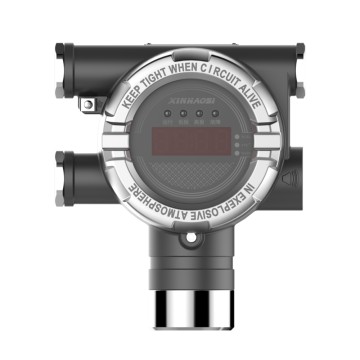
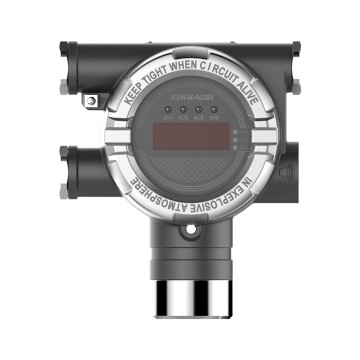
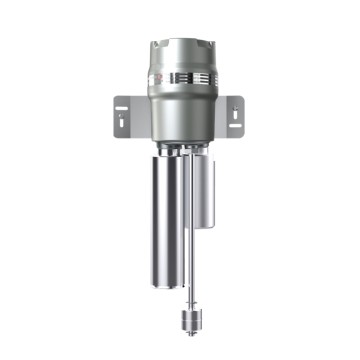
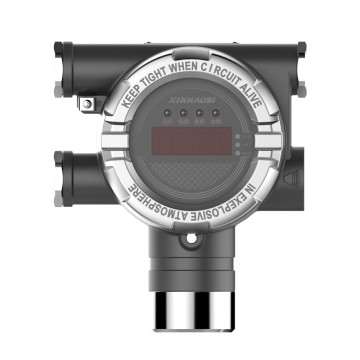
Deploy dependable explosion-proof combustible gas sensing units and rapid-response safety shutoff actuators engineered specifically for offshore drilling rigs, floating production vessels, and marine petrochemical terminals.
Offshore oil and gas platforms, Floating Production Storage and Offloading vessels (FPSOs), and marine LNG bunkering infrastructures operate in some of the most unforgiving industrial environments on Earth. In these high-risk assets, methane (CH₄)—the primary component of natural gas—represents both an extreme catastrophic explosion risk and a severe greenhouse gas emission challenge. Historically, fixed gas detection systems on offshore topsides focused primarily on life safety and explosion prevention (detecting Lower Explosive Limit, or LEL, thresholds). However, modern regulatory frameworks including the International Maritime Organization (IMO) decarbonization standards, the Oil & Gas Methane Partnership 2.0 (OGMP 2.0), and stringent EU/US EPA methane abatement regulations have transformed methane monitoring from a purely localized safety mechanism into an enterprise-level operational compliance imperative.
Marine environments impose harsh physical demands that quickly degrade standard industrial sensors. Continuous exposure to sodium chloride salt spray, heavy fog, driving monsoon rains, mechanical vibrations from massive compression machinery, and corrosive hydrogen sulfide (H₂S) trace gases leads to sensor poisoning, optical obscuration, and rapid mechanical corrosion. As energy companies move toward deepwater exploration and automated unmanned platforms (Normally Unattended Facilities - NUF), the demand for methane gas detectors that deliver ultra-long calibration intervals, zero drift, and autonomous self-diagnostics has surged exponentially.
Enclosures crafted from electro-polished 316L stainless steel, coupled with hydrophobic and oleophobic PTFE sintering filters, repel aggressive saline moisture and high-pressure washdown spray.
Offshore emergency fire and gas systems (FGS) require certified safety integrity levels with dual microprocessor redundancy and complete self-checking architectures to eliminate unrevealed system faults.
Advanced non-dispersive infrared (NDIR) and open-path laser absorption sensors eliminate the vulnerability to silicones, sulfur, and lead poisoning common in offshore marine drilling operations.
Choosing the correct sensor topology for offshore platforms requires balancing detection kinetics, maintenance frequency, false-alarm mitigation, and capital expenditures. While catalytic bead (pellistor) detectors were standard for decades, offshore facility operators are migrating aggressively toward optical sensing technologies due to their lower total cost of ownership and immunity to airborne contaminants.
| Sensing Technology | Operating Principle | Offshore Suitability | Calibration Cycle | Poisoning Risk |
|---|---|---|---|---|
| Point NDIR Infrared | Specific 3.3 μm / 3.4 μm spectral absorption in an active optical chamber | Optimal for topsides, compressor rooms, and engine compartments | 12 - 24 Months | Completely Immune |
| Open-Path Laser / IR | Active beam across 5m - 120m line-of-sight monitoring perimeters | Superior for drill floor perimeters, wellhead clusters, FPSO deck lines | Factory Lifetime Calibration | Completely Immune |
| Catalytic Combustion (Pellistor) | Exothermic surface oxidation on a heated catalytic bead | Moderate; restricted to clean air ventilation intakes | 1 - 3 Months | High (Silicones, H₂S, Halogens) |
| Acoustic / Ultrasonic Leak Detection | High-frequency sound detection generated by pressurized gas leaks | Complementary; instantaneous leak sensing unaffected by wind dilution | Annual inspection | None (Acoustic basis) |
The strategic deployment of methane detectors across an offshore oil platform or marine gas carrier must account for localized ventilation, wind currents, deck geometry, and explosion hazards:
Floating Production Storage and Offloading (FPSO) units process high-pressure hydrocarbons directly at sea. The topside modules are intensely congested with crude separation vessels, gas re-injection compressors, and glycol dehydration packages. In this application, high ocean winds can rapidly disperse methane gas clouds before they reach point sensors. A layered detection philosophy combining open-path infrared perimeter barriers with targeted point NDIR detectors around flange connections, valve manifolds, and seal rings provides immediate envelope coverage and pinpoint localized alarm verification.
The wellhead deck is characterized by extreme mechanical shock, cyclic vibrations from drill strings, mud tank off-gassing, and transient spikes of toxic hydrogen sulfide mixed with methane. Detectors must carry robust explosion-proof ratings (Ex d / Ex ia) and heavy vibration dampening. Intelligent methane detectors installed here must feature optical heated optics to counteract condensation from rapid offshore temperature transitions (e.g., squalls and high humidity).
In double-hull tankers, LNG carriers, and FPSO cargo pump rooms, methane can migrate invisibly and collect in confined, oxygen-depleted compartments. Catalytic sensors fail in oxygen-deficient atmospheres because they require ambient oxygen to oxidize the hydrocarbon gas; conversely, point NDIR infrared detectors function perfectly in zero-oxygen nitrogen-purged voids, providing vital protection against explosive vapor buildup prior to crew entry or ballast water de-ballasting operations.
The fourth industrial revolution is reshaping offshore safety infrastructure. The integration of Artificial Intelligence at the edge transforms a standalone methane gas detector into an active safety node. Modern smart gas detectors analyze gas plume dynamics, cross-referencing sensor rise times and localized anemometer (wind direction and velocity) data to determine whether a leak is an isolated minor fugitive venting or a catastrophic pressurized pipeline rupture.
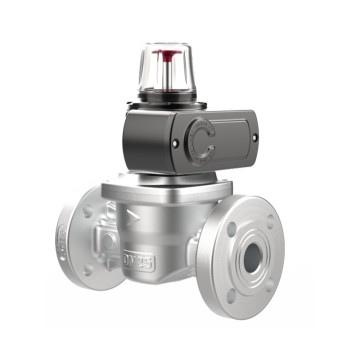
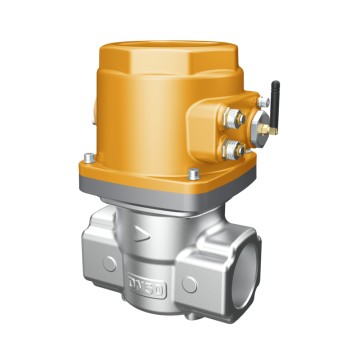
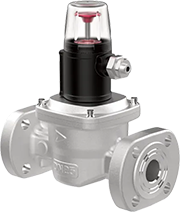
When verified methane concentrations exceed configured safety setpoints (commonly 20% LEL for initial alert and 60% LEL for emergency action), the field detectors initiate automated multi-tier protocols via high-integrity 4-20mA HART, Modbus RS485, or Safety-over-Ethernet protocols. These outputs directly trigger explosion-proof emergency shut-off valves (ESDV)—such as the Xinhaosi CT-XF5 and BT-XF5 industrial solenoid valves—to isolate upstream fuel gas lines within milliseconds, trip localized electrical power grids, activate water-mist deluge systems, and prevent flammable gas plumes from entering HVAC ventilation dampers in crew living quarters.
Precision-engineered detection and control modules designed to secure industrial processing, marine platforms, and commercial installations from combustible and toxic hazards.
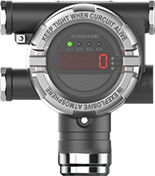

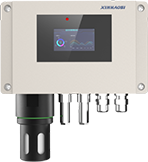


We utilize advanced electronic detection technology to make unknown gas leak risks clear and visible.
Founded in 2003, Xinhaosi is one of the most influential and reliable brands in gas safety industry. We provide customer-focused products and services to safeguard the safe operation of every factory, the comfort of every city, the peace and happiness of every home. Powered by cutting-edge production systems and technology, we deliver more advanced, intuitive, and precise gas safety solutions for shaping a safer future world.
Empowered by technology, Full-chain integration, Comprehensive protection, Shaping the future with intelligence.
























Stay tuned for the latest updates from Xinhaosi & the global safety industry.
January 20, 2026 – The global gas detection industry is witnessing a surge of technological breakthroughs in early 2026, with leading players launching advanced solutions that integrate precision sensing, real-time connectivity, and multi-functional safety features to address evolving risks in high-hazard sectors like oil and gas, chemicals, and refining.
As Battery Energy Storage Systems (BESS) play an increasingly critical role in global renewable energy grids, the demand for specialized gas detection equipment tailored to BESS safety needs is surging—driven by risks like thermal runaway, which releases hazardous gases such as hydrogen (H₂), carbon monoxide (CO) and methane (CH₄).
Jan. 22, 2026 – China has rolled out a suite of new national standards and technical regulations for gas detection equipment in 2026, marking a critical shift toward stricter safety oversight and pre-accident prevention across high-risk sectors like petrochemicals, catering, and municipal engineering.