Leave Your Message
High-precision, certified detection units built to perform reliably under extreme marine conditions.


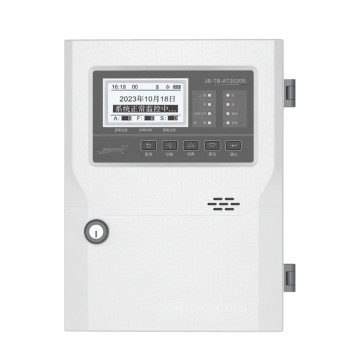
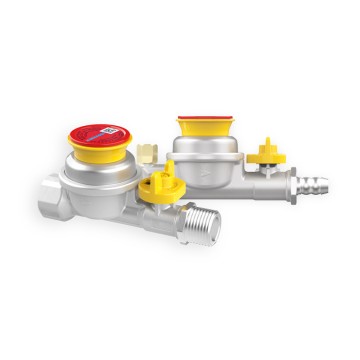
Marine and offshore oil platforms represent some of the most hostile, volatile, and isolated working environments on the planet. Operating miles away from the shoreline, these monolithic structures are continuously exposed to harsh weather, extreme temperatures, and highly corrosive saltwater. More importantly, they process vast quantities of highly flammable hydrocarbons under immense pressure. Among these hydrocarbons, Propane (C₃H₈) stands out as a major hazard due to its wide usage as a fuel source and its presence as a byproduct of oil extraction. In this high-stakes environment, a robust and reliable Propane Gas Leak Detector For Marine And Offshore Oil Platforms is not just a regulatory compliance check—it is a fundamental pillar of life safety and asset protection.
The primary challenge with propane leaks in marine environments is the gas's physical behavior. Unlike methane, which is lighter than air and naturally dissipates upward into the atmosphere, propane is approximately 1.5 times heavier than air. When a leak occurs on an offshore platform, the escaped propane gas does not rise; instead, it sinks, pooling in low-lying areas, cable trenches, bilge compartments, and poorly ventilated modules. This creates invisible, highly explosive gas pockets that can easily find an ignition source from electrical equipment, hot surfaces, or maintenance work. A minor leak can rapidly escalate into a catastrophic explosion, threatening the lives of hundreds of offshore workers and causing billions of dollars in structural damage. Therefore, the implementation of specialized marine-grade propane leak detectors is paramount.
Because propane is heavier than air, typical ceiling-mounted detectors will fail to identify a leak until the space is already filled with explosive gas. Detectors must be installed close to the deck level (within 0.3 meters of the floor) and in low-lying areas where gas accumulation is statistically most likely to occur.
From source protection to localized monitoring, we cover all aspects of gas safety.
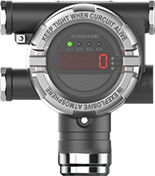
Safety First from Precision Sensing

Home Safety from Gas Monitoring
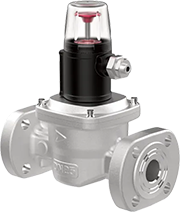
Protecting from the Source
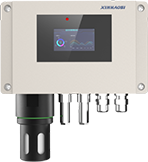
Smart Sensing for Urban & Marine Gas
The commercial landscape for marine gas detection has evolved significantly over the past decade. Today, the global offshore oil and gas industry is subject to some of the strictest safety regulations in the world. Regulatory bodies and classification societies such as the International Maritime Organization (IMO), Safety of Life at Sea (SOLAS), Det Norske Veritas (DNV), the American Bureau of Shipping (ABS), and the International Electrotechnical Commission (IECEx) mandate the installation of continuous gas monitoring systems in all hazardous zones.
From a commercial perspective, offshore operators are no longer looking at gas detection as an isolated purchase. Instead, they demand fully integrated safety ecosystems. A modern marine gas detection system must seamlessly interface with the platform's Emergency Shutdown (ESD) systems, fire detection networks, and public address/general alarm (PA/GA) systems. When a propane leak is detected, the system must be capable of automatically isolating the gas source, activating ventilation systems, and triggering visual and audible alarms to guide personnel to safety.
Furthermore, the total cost of ownership (TCO) has become a key buying factor for offshore operators. The costs associated with maintaining gas detectors on an offshore platform are exceptionally high due to the logistics of transporting technicians and equipment to remote locations. Consequently, there is a strong commercial push towards gas detectors that offer long-term stability, minimal calibration drift, and self-diagnostic capabilities to extend maintenance intervals.


Founded in 2003, Xinhaosi is one of the most influential and reliable brands in gas safety industry. We provide customer-focused products and services to safeguard the safe operation of every factory, the comfort of every city, the peace and happiness of every home. Powered by cutting‑edge production systems and technology, we deliver more advanced, intuitive, and precise gas safety solutions for shaping a safer future world.
Future Ready & Smart Sensing Solutions
More About UsTo design an effective gas detection layout, engineers must perform a detailed gas dispersion study and identify critical application scenarios across the platform:
Designing a Propane Gas Leak Detector For Marine And Offshore Oil Platforms requires overcoming extreme environmental challenges. The marine atmosphere is saturated with salt spray, which is highly corrosive to metals and electronic components. Standard industrial gas detectors would quickly fail in such conditions. Therefore, marine-grade detectors must be housed in heavy-duty, corrosion-resistant materials such as 316 stainless steel or copper-free aluminum, and must feature high ingress protection ratings (IP66/IP67).
Another challenge is sensor poisoning. Traditional catalytic bead sensors, while effective for detecting combustible gases, are highly susceptible to poisoning by silicones, sulfur compounds, and halogenated hydrocarbons—all of which are common in offshore environments. Once poisoned, a catalytic sensor fails to detect gas, creating a false sense of security. To mitigate this risk, modern offshore installations heavily favor Non-Dispersive Infrared (IR) sensor technology. IR sensors are immune to chemical poisoning, do not require oxygen to operate, and offer superior long-term stability and accuracy.
Empowered by technology, full-chain integration, and comprehensive protection, we shape the future of industrial safety with intelligence.
More About SolutionsThe future of marine gas detection lies in digitalization, connectivity, and intelligence. The integration of the Industrial Internet of Things (IIoT) is enabling the deployment of wireless gas detection networks. Installing physical conduits and wiring on an existing offshore platform can cost thousands of dollars per meter. Wireless detectors, utilizing secure mesh protocols like ISA100.11a or WirelessHART, dramatically reduce installation costs while providing redundant communication paths.
Furthermore, Artificial Intelligence (AI) and machine learning are beginning to play a role in predictive safety. By combining real-time data from gas detectors with meteorological data (wind speed, direction, temperature) and process data (pressure, flow rate), AI algorithms can predict how a gas cloud will disperse in the event of a leak. This allows control room operators to make informed decisions regarding evacuation routes and shutdown sequences.
Finally, the development of smart, self-calibrating sensors is reducing maintenance overheads. These sensors utilize internal reference channels to automatically compensate for temperature changes, humidity, and aging, alerting operators only when physical intervention or sensor replacement is strictly necessary.
Trusted by industry leaders worldwide to deliver reliable safety and detection systems.
























Stay tuned for the latest updates from Xinhaosi & the Industry.
January 20, 2026 – The global gas detection industry is witnessing a surge of technological breakthroughs in early 2026, with leading players launching advanced solutions that integrate precision sensing, real-time connectivity, and multi-functional safety features to address evolving risks in high-hazard sectors like oil and gas, chemicals, and refining.
As Battery Energy Storage Systems (BESS) play an increasingly critical role in global renewable energy grids, the demand for specialized gas detection equipment tailored to BESS safety needs is surging—driven by risks like thermal runaway, which releases hazardous gases such as hydrogen (H₂), carbon monoxide (CO) and methane (CH₄).
Jan. 22, 2026 – China has rolled out a suite of new national standards and technical regulations for gas detection equipment in 2026, marking a critical shift toward stricter safety oversight and pre-accident prevention across high-risk sectors like petrochemicals, catering, and municipal engineering.
Explore our full range of explosion-proof detectors, controllers, and emergency shut-off systems.